
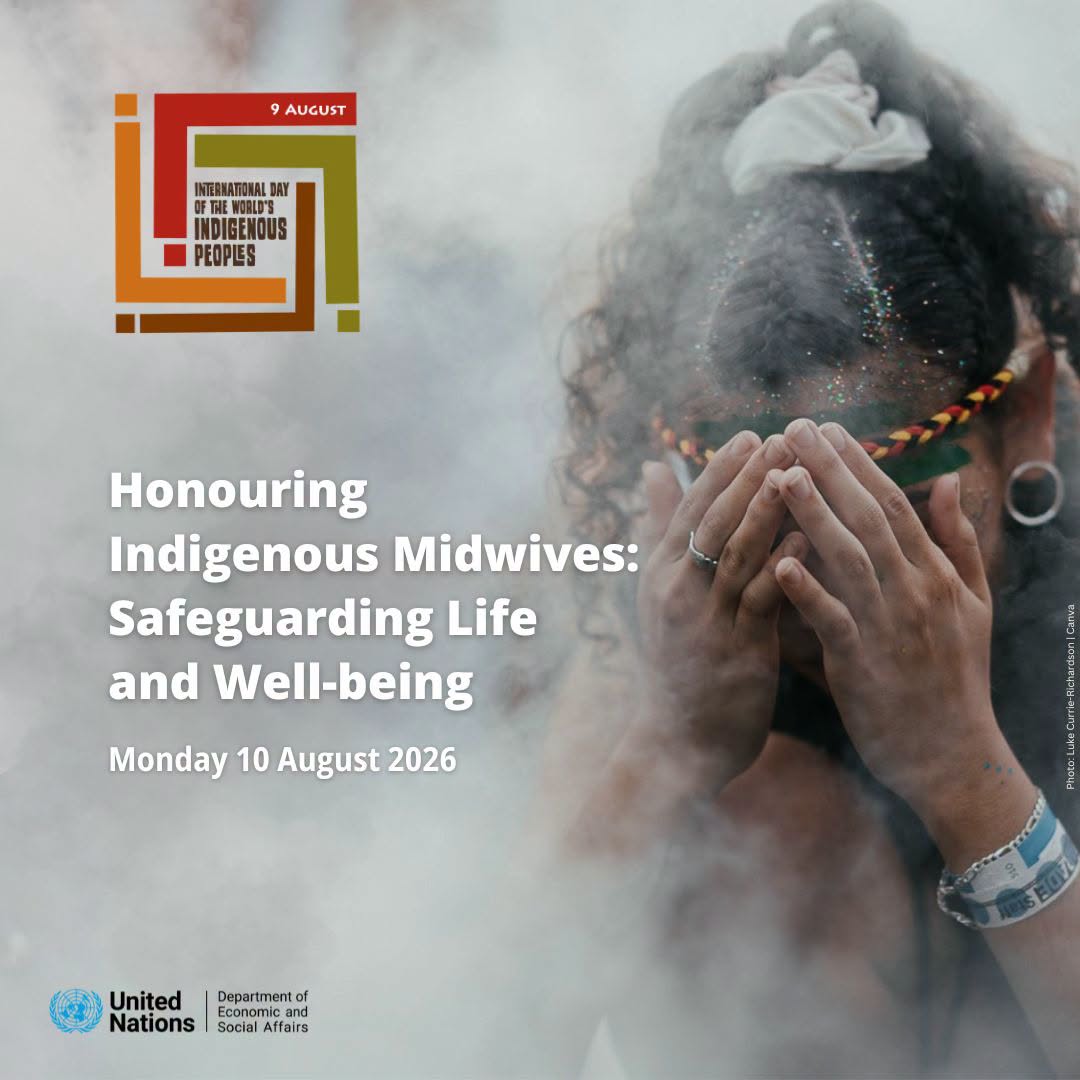
Every year on 9 August,
the world marks the International Day of the World's Indigenous Peoples,
celebrating the cultures, languages, knowledge systems, and contributions of
Indigenous communities. This year's United Nations theme, "Honouring
Indigenous Midwives: Safeguarding Life and Well-being," reminds us that
some of the world's most valuable healthcare providers often remain invisible
in national health systems.
According to the United
Nations, there are approximately 476 million Indigenous Peoples living in more
than 90 countries, accounting for less than 6 percent of the global population
but at least 15 percent of the world's poorest people. Indigenous communities
speak most of the world's 7,000 languages, represent around 5,000 distinct
cultures, and steward nearly 28 percent of the Earth's land surface, including
ecosystems that are critical for biodiversity conservation and climate
resilience. Yet they continue to face disproportionate barriers in accessing
healthcare, education, land rights, and economic opportunities.
The 2022 Population and
Housing Census recorded approximately 1.65 million Indigenous people from 50
ethnic communities, representing about 1 percent of the country's population.
The largest communities include the Chakma, Marma, Tripura, Santal, Oraon, Garo,
Munda, and Mro, living across the Chattogram Hill Tracts and the plains of
northern, northwestern, northeastern, and southwestern Bangladesh.
The theme of this
year's observance is particularly relevant because maternal health remains one
of the most sensitive indicators of social inclusion. In many remote Indigenous
villages, particularly in the Chattogram Hill Tracts, traditional midwives continue
to serve as the first and sometimes only source of maternal care. They provide
prenatal guidance, assist childbirth, support mothers after delivery, and
preserve generations of Indigenous medical knowledge.
Bangladesh has made
remarkable progress in maternal healthcare over the past two decades. The
Bangladesh Demographic and Health Survey (BDHS) 2022 reports that approximately
88 percent of births are now attended by skilled health personnel, one of the
country's major public health achievements. However, national averages can
conceal persistent inequalities experienced by remote and marginalized
communities.
Research among the Mro
community in the Chattogram Hill Tracts found that only about 30 percent of
Indigenous women had ever accessed formal maternal healthcare services.
Distance from health facilities, poor transport, language barriers, financial
constraints, and limited availability of culturally appropriate healthcare
continue to prevent many Indigenous women from receiving timely medical care.
Honouring Indigenous
midwives should not be interpreted as promoting traditional practices over
modern medicine. Rather, it is about acknowledging their trusted position
within communities and creating partnerships between traditional knowledge
holders and the formal healthcare system. Proper training, referral mechanisms,
culturally sensitive health communication, and collaboration with community
health workers can strengthen maternal healthcare while respecting Indigenous
culture.
There is also an
important policy dimension. Bangladesh has committed itself to achieving the
Sustainable Development Goals, particularly SDG 3 (Good Health and Well-being),
SDG 5 (Gender Equality), and the overarching principle of "Leaving No One
Behind." Achieving these commitments requires reducing disparities
experienced by Indigenous communities through improved healthcare access,
multilingual public services, better rural infrastructure, and greater
participation of Indigenous women in health planning and local governance.
Recognition must also
extend beyond healthcare. Indigenous Peoples continue to seek stronger
protection of their languages, customary land rights, education opportunities,
and meaningful participation in development decisions that affect their lives.
Inclusive development cannot be achieved if the voices of Indigenous
communities remain absent from policy discussions.
As Bangladesh observes
the International Day of the World's Indigenous Peoples 2026, honouring
Indigenous midwives should become more than a ceremonial gesture. It should
inspire concrete investments in culturally responsive healthcare, stronger
community health systems, and policies that value Indigenous knowledge
alongside scientific innovation.
Ultimately,
safeguarding Indigenous midwives means safeguarding Indigenous communities
themselves. It means recognising that healthcare is not only about hospitals
and technology but also about trust, culture, dignity, and human rights. By
protecting Indigenous knowledge and ensuring equal access to quality services,
Bangladesh can move closer to a future where development is truly inclusive and
every mother, regardless of ethnicity or geography, has the opportunity to give
birth safely and with dignity.
Share this page via
More from Mehedi Hasan